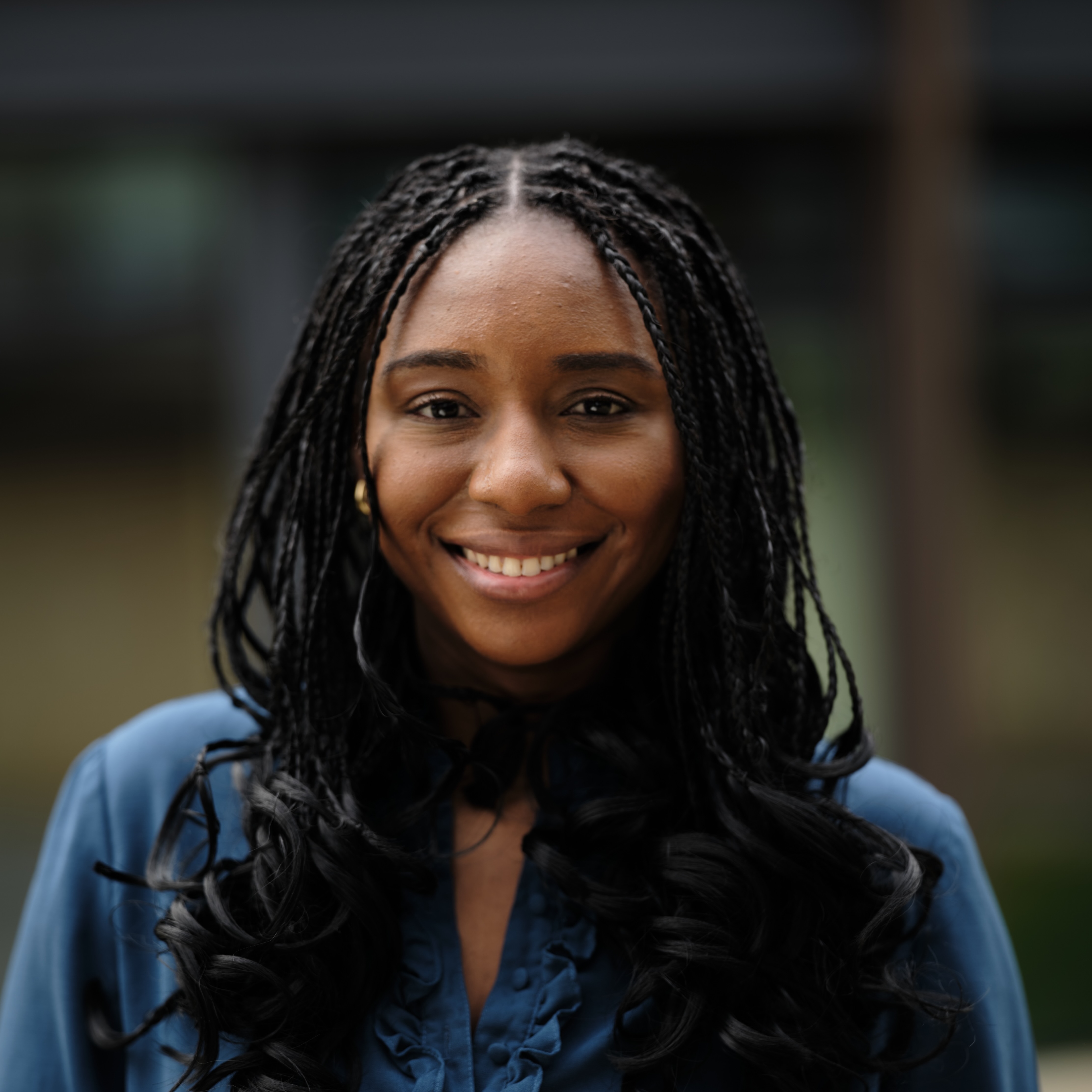
Kenechukwu Nwagbo
Political Economy Specialist
Dr. Kenechukwu Nwagbo brings to Open PEA over a decade of frontline, research, and policy experience in education and international development, with a particular focus on basic education reforms in resource-constrained settings. In previous work, she has coordinated large-scale systems-strengthening reform for more than 200,000 learners in conflict-affected north-eastern Nigeria, led international research collaborations with multilateral agencies and policy think tanks across Africa, Asia, and Latin America, and contributed to evaluations of girls’ education programmes in Nepal, Kenya, Ghana and Tanzania. She has also co-designed analytical frameworks for innovative approaches to evidence synthesis.
She holds a PhD in Education and International Development from the University of Cambridge. Her doctoral dissertation examined the politics of public-private partnerships in education in Nigeria. Before this, she earned an MPhil in Education, Globalisation and International Development from the University of Cambridge and a BA in International and Comparative Politics from the American University of Nigeria.What motivates me at Open PEA
I have always been fascinated about people. About how we come together, despite our differences, to build safer, more just, and more prosperous societies. The dynamism of individuality often requires the need for institutions – the establishment of formal rules and systems of governance that help us to live and work together. Yet, around the world, there is a wide variation in how well these institutions serve the public. This gap is especially pronounced in the emerging economies of Africa and Asia, which are home to the majority of the world’s population and the focus of sustained international attention and engagement, including here at the University of Oxford.
We are all affected by public policy, and so everyone, not just the experts, deserve to understand how things work (or fail to work) around us. Policy outcomes are not straightforward, and decisions are not made in a vacuum. For example, post-colonial states have had to navigate a global game whose rules were set when they had little voice, from lending terms to policy advice, shaped by the Bretton Woods institutions. Historically, these external pressures have narrowed the policy choices available to governments and often pushed debt financing and market reforms that disadvantaged ordinary people.
The recognition of this does not absolve domestic elites, who wield significant political and economic power, from their responsibilities. Their choices shape how rules are written and enforced. Most notably, how elites rule, compete, and negotiate among themselves often determines whether reforms succeed, stall, or unravel. Policy outcomes are therefore shaped by both domestic contestations and international constraints that are often hidden from public view. Making these pressures visible is one way of helping people understand why policies play out the way they do and identifying the most feasible pathways for meaningful change.
This is why Open PEA resonates with me. It brings politics into the forefront of technocratic policy debates, and it does so publicly. Simply put, politics is the everyday interactions involved in introducing, designing, and implementing change. So, when we ask ourselves why similar policies produce very different results across countries, we are really asking about how power, incentives, and interests (whether progressive, benign, or malign) interact within particular contexts.
Political economy analysis can help us see these interactions more clearly. This kind of analysis is not new. Political economy analysis has long informed risk assessment and institutional strategy, but it is often technical and conducted behind closed doors. I believe it should not stay there. Making this analysis accessible helps widen the conversation and strengthens public understanding of how change actually happens.
As an education specialist, much of my work before Open PEA has focused on the politics of education. This has allowed me to capture how deeply political education reform really is. It has also shown me that these dynamics are not confined to one sector. The overarching patterns of power, incentives, and constraints embedded within societies shows up across different sectors. This is why I am motivated to apply a political lens more broadly and to translate these insights into clear, accessible language for public consumption.
Selected publications
Nwagbo, K. and S. D’Angelo (2025) 'Policy mapping of accelerated education in 50 countries: A companion analysis for Education.org’s transitions synthesis', Education.org. ⧉
Nwagbo, K., E. Charvet and Southern Voice (2024) 'Project synthesis note Ed-tech priorities for equity and inclusion', Southern Voice. ⧉
Southern Voice (2023) 'Rethinking acceleration and transformation: Preferred approaches to education policy among Global South governments and experts', Policy Brief No. 16 (Authored on behalf of Southern Voice). ⧉
Ordóñez, A., Z. Abubakar, T. Mamoun and K. Nwagbo (2022) 'Towards Transforming Education Summit: Is Acceleration the Right Approach?' SDG Knowledge Hub, IISD. ⧉
Email: kene.nwagbo@bsg.ox.ac.uk
LinkedIn: in/kenechukwunwagbo