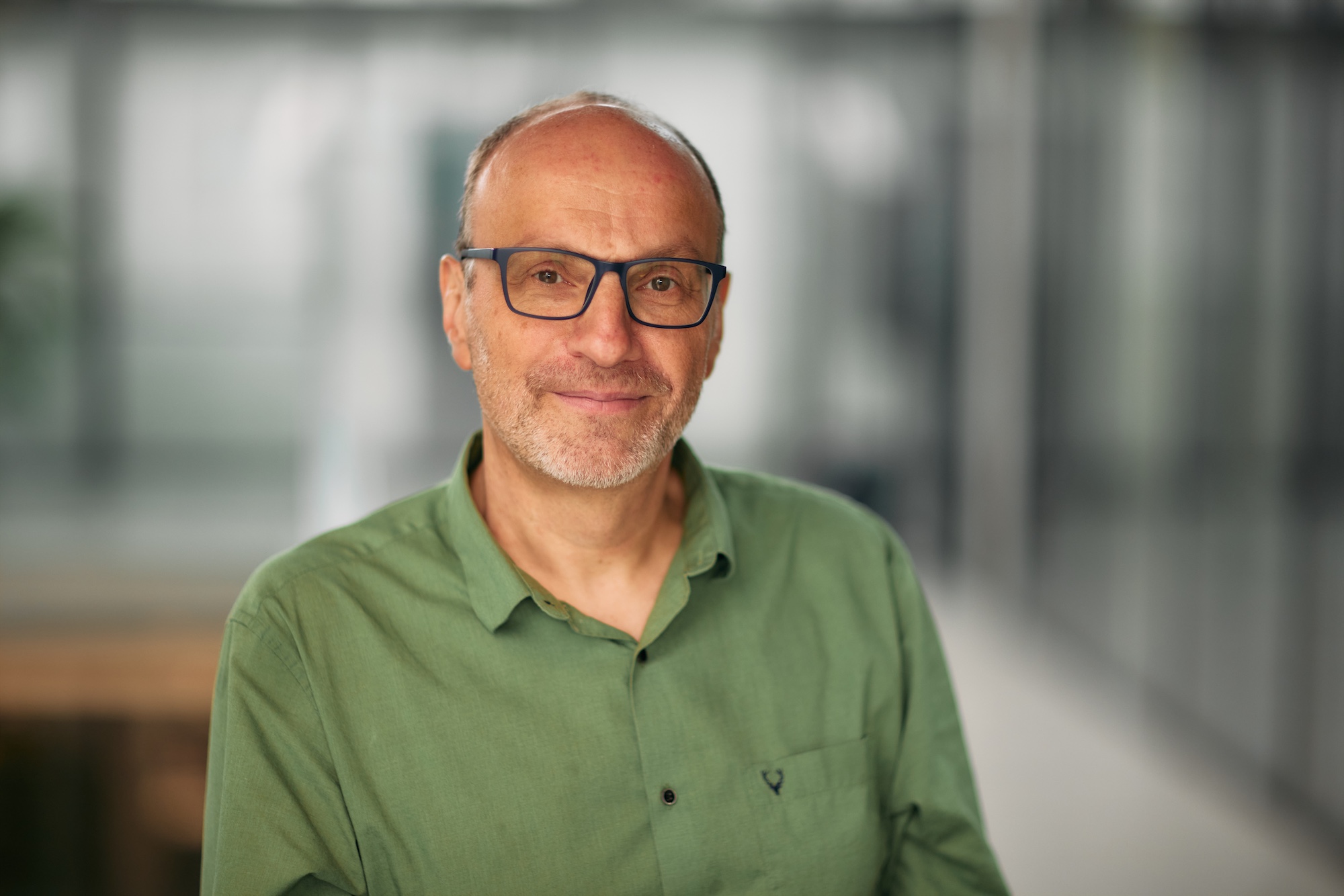

Stefan Dercon
Academic Director
Stefan Dercon is Director of the Centre for the Study of African Economies, a Professorial Fellow of Jesus College, and the Academic Director of the Economic Policy Network. He is Professor of Economic Policy at the Blavatnik School of Government and the Department of Economics and has worked extensively as a policy advisor, providing strategic economic and development advice, and promoting the use of evidence in decision making, including as Chief Economist of the UK Department of International Development 2011-2017.
Stefan's research interests concern what keeps some people and countries poor: the failures of markets, governments and politics, mainly in Africa, and how to achieve change.
His latest book, Gambling on Development: Why some countries win and others lose was published in May 2022. It draws on his academic research as well as his policy experience across three decades and 40-odd countries, exploring why some countries have managed to settle on elite bargains favouring growth and development, and others did not. Previously, Dull Disasters? How Planning Ahead Will Make A Difference was published in 2016, and provides a blueprint for renewed application of science, improved decision making, better preparedness, and pre-arranged finance in the face of natural disasters.
Stefan is a Fellow of BREAD, a Research Fellow of CEPR and of IZA, an Affiliate of J-PAL, a Non-resident Fellow, Centre for Global Development, Washington and Fellow of the Royal Society of Arts and Manufacture (FRSA). He studied economics and philosophy at the Catholic University of Leuven (Belgium) and holds an MPhil and DPhil in Economics from the University of Oxford. Before re-joining the University of Oxford, he held positions at the University of Addis Ababa (Ethiopia), the Catholic University of Leuven, and WIDER (Helsinki), part of the United Nations University.
In 2018, the Queen awarded him as an honorary Companion of the Most Distinguished Order of St Michael and St George (CMG) for services to economics and international development. In 2025, Stefan was elected as a Fellow of the British Academy in recognition of his outstanding contributions to the social sciences.
What motivates me at Open PEA
After three decades of experience working in development, including as Chief Economist to UK’s DfID and as an academic at the University of Oxford, I became convinced that political interests, rather than economic or technical constraints, are often the main thing holding countries back.
This realisation led me to write Gambling on Development. In the book, I explore how countries’ elite bargains – the unwritten rules by which elite actors divide up power and resources – shape national governments’ goals, behaviours, and outcomes. If elites choose to defend a status quo of patronage, clientelism, and using the state for their own gain, growth and development are unlikely. But if elites judge that their long-term interests could potentially be better served by pursuing broad-based growth – i.e. if they choose to take what I call a ‘gamble on development’ – meaningful progress at least has a chance.
I co-founded the Open Political Economy Analysis Programme (Open PEA) to provide reform-minded actors with tools for converting the insights of Gambling on Development into action. If you liked my book but were not sure what to do differently on Monday morning, then Open PEA will help.
Open PEA’s plain-language products lay out the intrenched dynamics of knotty issues in a wide variety of countries, sectors, and contexts – from the maize economy in Malawi and fuel subsidies in Nigeria to civil service reform in Nepal. They explain the problem, the players, the rules of the game, and how they fit together to create a stable status quo. Perhaps most importantly, they also provide practical, politically feasible propositions for shifting incentives in ways that are more conducive to development.
Open PEA is supported by philanthropic funding and operates independently of foreign policy agendas. This financial independence allows us to engage directly and candidly with political realities. Our work is published open access, so that all stakeholders may benefit from it.
It’s a project whose time has come. This sort of information has long existed in the internal documents of big development agencies and academic research, but fear of being seen as ‘political’ has kept political economy analysis on the fringes of the big conversations. As a sector, it’s incumbent upon us to normalise the inclusion of politics in developmental thinking, so that the logjams we’ve all fought against for decades can finally be shifted. In this mission, Open PEA is leading the way.